
.svg)
Policy Rewiring
Every part of the system is being re-regulated at once, on different clocks and sometimes in opposite directions: the rulebook, not the technology, now sets the terms.
One of the five forces in the SFF 2026 theme. See all five

Policy Sessions at SFF 2026
-
Policy Stage
Hall 3, Singapore EXPO
Open
Policy Rewiring
Wed, 18 Nov | 12:45 PM - 1:30 PM
Central Banks and Future Payment Systems: Priorities, Trade-offs, and Opportunities for Cross-Border Collaboration
-
 Daranee Saeju, Deputy Governor, Payment Systems Stability & Financial Services Supervision, Bank of Thailand
-
 Tommaso Mancini-Griffoli, Head of the Innovation Hub, Bank for International Settlements
About this session
As financial systems evolve, central banks face a dual challenge -modernising the infrastructure that works today while building the foundations for what comes next. This means making strategic choices around the future of digital money and settlement, wholesale and retail systems connectivity across borders, and the interoperability, liquidity and governance arrangements that underpin them. At the same time, an increasingly AI-enabled financial system is raising the bar for the safety, reliability and resilience of critical payment infrastructure. This panel will discuss the key building blocks for the next generation of payments and where deeper cross-border collaboration can deliver capabilities that individual jurisdictions cannot achieve alone.
-
-
Policy Stage
Hall 3, Singapore EXPO
Open
Policy Rewiring
Wed, 18 Nov | 1:30 PM - 1:45 PM
Stablecoins: Can Europe Catch the Wind?
About this session
Howard Davies, the chairman of Qivalis, will assess the state of play on stablecoin developments in the EU. Which companies are active? How does the EU regulatory framework compare with others? What use cases are envisaged, and how will they sit alongside the digital euro under construction by the European Central Bank?
Qivalis is an innovative new venture, owned by a large consortium of EU banks, offering a new approach to the marketplace. Having now received regulatory approval it expects to launch in Q1 of 2027. -
Policy Stage
Hall 3, Singapore EXPO
Open
Policy Rewiring
Wed, 18 Nov | 1:45 PM - 2:15 PM
Stablecoins: From Fringe to Framework
-
 Nicole Sandler, Chief Ecosystem Officer, Ubyx Inc
-
 Peter Kerstens, Advisor, DG FISMA, European Commission
-
 Walter Hessert, Head of Strategy, Paxos
-
 Gabriel Lee, Advisor, Global Finance & Technology Network (GFTN)
-
 Sasha Mills, Executive Director of Financial Market Infrastructure, Bank of England
About this session
Stablecoins have moved out of the regulatory grey zone and into a proper legal framework. That shift changes the question facing every institution, from whether to engage at all to exactly how. Regulators in different markets are setting the terms at different speeds, and institutions no longer have the luxury of waiting for global consensus before deciding. This discussion works through the practical choices on the table: issuing, distributing or custodying stablecoins directly, against the risk of simply watching deposits drift toward whichever option moves fastest. Participants leave with a sharper sense of where their own institution sits on that spectrum, and what waiting actually costs under the new rules. One key question the discussion will dive into: whether to issue, distribute or custody stablecoins themselves, or simply watch deposits migrate to them regardless.
-
-
Policy Stage
Hall 3, Singapore EXPO
Open
Policy Rewiring
Wed, 18 Nov | 2:15 PM - 2:45 PM
RWA & Tokenization: When the Asset Becomes a Token, What Happens to the Rules?
-
 Dr. Nopnuanparn Pavasant, Assistant Secretary-General, SEC Thailand
-
 Prof. Tālis Putniņš, Co-Chief Executive Officer & Chief Scientist, DFCRC
About this session
Tokenization is moving real-world assets such as treasuries, funds and credit onto new digital rails. The technology is advancing quickly. The harder question is whether the legal and regulatory framework can keep pace. When an asset becomes a token, does it retain the same rights and protections? Who owns the underlying asset? Which jurisdiction's rules apply when the token crosses a border? And what happens when different markets take different approaches? This conversation brings regulators and market participants together to examine where the rules are clear, where they diverge, and what still needs to be resolved for tokenized assets to scale.
-
-
Policy Stage
Hall 3, Singapore EXPO
Open
Policy Rewiring
Wed, 18 Nov | 2:45 PM - 3:15 PM
Cross-Border Connectivity: How Regional Blocs are Building Their Own Financial Integration
-
 Clara B. Arthur, Chief Executive, Ghana Interbank Payment & Settlement Systems (GhIPSS)
-
 José Beltrán, Board Chair, Nexus Global Payments Ltd
-
 Yasuto Watanabe, Chief Executive Officer & Director, ASEAN+3 Macroeconomic Research Office (AMRO)
-
 Maha El Dimachki, Chief Executive Officer, GFTN Solutions, Global Finance & Technology Network (GFTN)
About this session
Not every country can build global-scale financial infrastructure alone. Across the world, groups of countries are pooling resources, coordinating oversight, and interlinking systems regionally, choosing collective action over waiting for a single global standard or going it alone.
This panel brings together three different models of that regional playbook. The discussion works through what it takes to build financial cooperation at the bloc level: how these regional mechanisms actually got built, what kept smaller or newer members willing to join in, and where this collective model succeeds — or strains — compared to a single institution building alone. Attendees leave with a practical view of when banding together beats going it alone, and what it costs to make that work. -
-
Policy Stage
Hall 3, Singapore EXPO
Open
Policy Rewiring
Wed, 18 Nov | 3:30 PM - 4:00 PM
Can Regulation Be Written Into Money Itself? The Case for Rules in the Rails, Tokenized Deposits & Conditional Money
-
 Dr. Eva Hüpkes, Secretary General, International Association of Deposit Insurers
-
 Ivan Odonnat, General Director for Financial Stability & Operations, Banque de France
-
 Kazuki Ueda, Director, Head of Fintech Group, Bank of Japan
-
 Vira Platonova, Global Head of Visa Direct, Visa
About this session
Tokenized deposits and conditional money take the programmability idea one layer deeper. They pilot whether settlement, eligibility and compliance can be embedded directly in the money rather than enforced around it. That raises a regulatory question few frameworks have caught up with: who is liable when the rule embedded in the transaction, not a human decision, turns out to be wrong. This discussion examines how the embedded-rules approach works in practice, and what it removes from the compliance function. It also looks at what new failure modes this introduces once the rule is baked into the transfer rather than checked afterwards. Attendees leave with a clearer view of where this model is genuinely ready, and where regulators are still working out how to hold it accountable. One key question the discussion will dive into: if compliance is embedded in the money itself, who is accountable when the embedded rule is wrong?
-
-
Policy Stage
Hall 3, Singapore EXPO
Open
Policy Rewiring
Wed, 18 Nov | 4:00 PM - 4:30 PM
Who Builds the Bridge Between National Payment Schemes; and Who Owns the Toll?
-
 Alan Ni, Chief Executive Officer, TNG Digital Sdn. Bhd.
-
 Carrie Suen, Vice President, Head of Global Affairs & Strategic Development, Ant International
-
 Lawrence Chan, Group Chief Executive Officer, Network for Electronic Transfers (Singapore)
-
 Jo Yeo, Director, Monetary Authority of Singapore
About this session
National instant payment schemes are proliferating around the world, yet most remain valuable only within their own borders. As domestic networks mature, the next source of value lies not in individual schemes, but in the bridges that connect them.
This session explores the emerging cross-border interoperability layer: who is building it, how common messaging standards and technical frameworks make it possible, and how governance, costs, revenues, and risks are shared among the parties involved. The discussion will examine the different models being adopted globally, from bilateral connections to multilateral networks and shared infrastructure platforms.
Participants will leave with a clearer understanding of where payment interoperability is succeeding in practice, what challenges remain, and the trade-offs between different connectivity approaches.
One of the central questions the panel will explore is: when one country's instant payment scheme needs to communicate with another's, who builds the bridge, and who owns the toll? -
-
Policy Stage
Hall 3, Singapore EXPO
Open
Policy Rewiring
Wed, 18 Nov | 4:30 PM - 5:00 PM
Cross-Border Wholesale Connectivity: Building a More Connected Financial System
-
 Dr. Alexandra Hachmeister, Director General Digital Euro, Deutsche Bundesbank
-
Ivan Odonnat, General Director for Financial Stability & Operations, Banque de France
-
 Tom Mutton, Executive Director of Payments Innovation & Fintech, Bank of England
-
Tommaso Mancini-Griffoli, Head of the Innovation Hub, Bank for International Settlements
-
 Alan Lim, Director & Head, Financial Infrastructure & Artificial Intelligence Office, Monetary Authority of Singapore
About this session
As digital money, tokenized assets and next-generation financial infrastructures gain traction around the world, jurisdictions and institutions are adopting a growing range of technologies, infrastructure models and settlement systems. While this diversity is driving innovation, it also raises an important question: how can increasingly interconnected financial systems continue to operate seamlessly across borders — without waiting for a single global standard to emerge first?
This panel brings together the institutions alongside policymakers and innovators from Asia, Europe and the UK to discuss what regional cooperation actually requires in practice: unified ledgers, synchronisation mechanisms, privacy-preserving technologies, and the governance arrangements that let independently built systems trust one another.
The discussion will examine the technical, legal, operational and regulatory challenges involved in scaling these regional models, and explore how deeper connectivity between them — rather than a single unified global system — may be the more realistic path to an interconnected financial system. -
-
Founders Stage
Hall 2, Singapore EXPO
Premium
Policy Rewiring
Wed, 18 Nov | 4:40 PM - 5:15 PM
Is Cross-Border Mutual Recognition Through Sandboxes Now Closer or Farther?
-
 Juan Pablo Ortega, Co-founder & Chief Executive Officer, Yuno
-
 Arjun Vir Singh, Partner, Global Head of Fintech & Digital Assets, Arthur D. Little
About this session
Expanding across fragmented regional markets forces digital finance startups into repetitive licensing cycles that multiply compliance costs and stall international scale. Recent progress by Kenya and Rwanda’s central banks in establishing mutual licence-passporting demonstrates that cross-border supervisory reciprocity is workable in practice. A recent survey by TechCabal Research revealed that 62.5% of regional fintechs already operate internationally or plan to, with an identical proportion backing passporting frameworks. This session convenes financial regulators and founders to examine how central banks can align supervisory frameworks and establish mutual recognition standards without compromising financial stability or compliance oversight.
-
-
Festival Stage
Hall 1, Singapore EXPO
Premium
Policy Rewiring
Thu, 19 Nov | 9:30 AM - 9:50 AM
In Conversation with Dan Katz, First Managing Director of the International Monetary Fund
-
 Dan Katz, First Deputy Managing Director, International Monetary Fund
-
 Sopnendu Mohanty, Group Chief Executive Officer, Global Finance & Technology Network (GFTN)
About this session
What happens to the economy when AI can act on our behalf?
AI agents already write code and handle many customer queries, and they are beginning to make purchases and payments. As they become more capable, they could change how businesses operate, how work is organized and how money moves, opening the way to new products, services, and sources of growth.
The spread of agentic AI also raises hard questions, especially about jobs. Which roles will change, what new kinds of work will emerge, and how can people build the skills to work alongside AI? In this fireside chat, IMF First Deputy Managing Director Dan Katz will discuss the economic promise of agentic AI, the concerns that come with it, and what policymakers can do to help workers and economies adapt. -
-
Policy Stage
Hall 3, Singapore EXPO
Open
Policy Rewiring
Thu, 19 Nov | 1:00 PM - 1:30 PM
The Agentic Enterprise: Accountability and Containment When the Machine Decides
-
Alan Lim, Director & Head, Financial Infrastructure & Artificial Intelligence Office, Monetary Authority of Singapore
-
 Casey Klyszeiko, Executive Vice President, Global Merchant & Network Services Product, American Express
-
 Richard Tong, Co-founder & Chief Executive Officer, Total Neural Enterprises
-
 Irene Liu, Managing Director, Risk & Compliance Lead for Southeast Asia, Accenture
About this session
Agentic AI has moved from pilots to systems that touch real credit decisions, real client money and real compliance rules, and the institutions getting the governance right this year are setting the ceiling for the next decade. This session examines where accountability sits once an agent, not a person, initiates the action, across risk, audit and reporting lines — and then confronts the scenario most institutions would rather not discuss: what actually happens in the moments after an agent goes wrong.
An agent doesn't take a coffee break. When it fails, it can fail at machine speed, across every transaction it touches, before a human even notices. So the real test isn't whether agents fail, but how fast an institution can contain them when they do, and who is authorised to make that call. This discussion moves from the accountability question to the operational one: what real-time containment looks like in practice, where autonomous systems are most likely to break, and how to build the kill switches and safeguards that limit the blast radius before autonomy is extended any further.
Attendees leave with a sharper view of the controls that need to exist before autonomy is extended further. One of the key questions the panel will look to dive deeper into: Who is accountable when an autonomous agent makes a bad call, moves client money, or silently breaks a compliance rule? -
-
Policy Stage
Hall 3, Singapore EXPO
Open
Policy Rewiring
Thu, 19 Nov | 1:30 PM - 2:00 PM
Scaling AI: Where Financial Services is Seeing Real Returns
-
 Abhijeet Ramesh, Vice President, Head of Innovation & Growth, Asia Pacific, Visa
-
 Janet Young, Managing Director and Group Head, Channels & Digitalisation, Strategic Communications & Brand, UOB
-
 Mayoran Rajendra, Managing Director, General Manager, AI Transformation Department, Sumitomo Mitsui Banking Corporation (SMBC)
-
 Quan Yu, General Manager of Bettr Global Credit, Ant International
-
 Dr. David Hardoon, Managing Director & Head of Advanced AI, Southeast Asia, Accenture
About this session
The conversation around AI in financial services has moved beyond experimentation. The challenge is no longer identifying promising use cases—it's deploying AI at scale in ways that deliver measurable business value. From payments and banking to fintech and customer engagement, leading institutions are embedding AI into core operations to improve productivity, strengthen risk management, personalise customer experiences, and accelerate innovation. Yet while some initiatives become enterprise capabilities, many others remain trapped in pilot mode.
Bringing together leaders from across the financial services ecosystem, this panel explores where AI is creating tangible impact today, what it takes to scale successful deployments across the organisation, and the operational, cultural, and governance challenges that determine whether AI delivers lasting value. The discussion will examine how institutions are prioritising AI investments, measuring success beyond productivity gains, and building the data, operating models, and organisational capabilities needed to move from isolated use cases to enterprise-wide transformation. -
-
Policy Stage
Hall 3, Singapore EXPO
Open
Policy Rewiring
Thu, 19 Nov | 2:00 PM - 2:30 PM
AI & Core Banking: Who Builds the Machine, Who Regulates it? Core Banking's New Compliance Perimeter
-
 Jessica Rusu, Chief Data, Information & Intelligence Officer, Financial Conduct Authority (FCA)
-
 Will Montgomery, Co-Founder & Chief Product Officer, Thought Machine
-
 Isabella Chase, Head of Policy, EMEA, TRM Labs
About this session
Core banking functions such as credit decisions, trade finance, fraud detection and KYC are shifting from pilot demonstrations into live, algorithm-driven workflows, and the institutions pulling ahead are rebuilding these processes end to end rather than adding AI on top of what already exists.
This session brings together the people actually doing that rebuild - the platforms it runs on, the institutions deploying it, and the regulators overseeing it - to work through what that rebuild actually requires: which controls move from human sign-off to automated checkpoints, and where the audit trail needs redesigning rather than retrofitting. -
-
Policy Stage
Hall 3, Singapore EXPO
Open
Policy Rewiring
Thu, 19 Nov | 2:30 PM - 3:00 PM
When Agents Direct Agents: Who Do You Actually Regulate?
-
 Claude Marx, Director General, Luxembourg Financial Services Regulator (CSSF)
-
 Daniela Stoffel, State Secretary, State Secretariat for International Finance (SIF)
-
 Jonah Crane, Head of Global Regulatory & Policy Strategy, Stripe
About this session
Financial regulation has always assumed that decisions can be traced through a clear chain of human accountability. But as AI agents begin directing other agents, that assumption starts to break down. Agentic AI won't just automate tasks—it has the potential to reshape how financial institutions are organised. Decision-making may shift between people and AI systems, reporting lines become more fluid, and the traditional structures underpinning governance, accountability and supervision begin to evolve. In that world, who is ultimately responsible for a decision? What exactly is a regulator supervising?
Bringing together senior policymakers and regulators, this session explores how supervisory frameworks—from senior manager accountability regimes to board oversight and the three lines of defence—need to adapt for organisations where humans increasingly govern systems that, in turn, govern other systems. The discussion will examine how institutions can demonstrate accountability, maintain effective oversight, and provide regulators with meaningful traceability in increasingly agent-driven operating models. Rather than focusing on individual AI decisions, the panel asks a broader question: how should governance evolve when the organisation itself becomes dynamic? -
-
Policy Stage
Hall 3, Singapore EXPO
Open
Policy Rewiring
Thu, 19 Nov | 3:00 PM - 3:30 PM
Digital Autonomy in AI: Optionality Over Absolute Independence
-
 Prof. Dr. Fritzi Köhler-Geib, Member of the Executive Board, Deutsche Bundesbank
-
 Dr. Joseph Breeden, Chief Executive Officer, CALM XAI
-
 Steven Maijoor, Executive Board Member & Chair of Supervision, De Nederlandsche Bank N.V.
-
 Sunayna Tuteja, Former Chief Innovation Officer, Federal Reserve System
About this session
No bank can or should build every AI capability itself. The real strategic question isn't build versus buy; it's whether institutions retain meaningful choice over the technology they depend on. As agentic AI begins making decisions that affect customers, capital, and risk, financial institutions must ask: How much digital dependency is acceptable? Can they trust and explain the decision of models they didn't build? What happens when the AI underpinning critical operations is controlled by a single provider?
The panel explores what digital autonomy should look like in the AI era. Rather than arguing for complete self-sufficiency, the discussion focuses on optionality: the ability to choose between providers, maintain control over sensitive data, satisfy regulatory expectations for explainability, and preserve resilient fallback options when business or technology priorities change. The conversation will examine how banks can adopt AI at scale without sacrificing transparency, governance or strategic independence - and why genuine optionality may become one of the industry's most important competitive advantages. -
-
FutureMatters Stage
Hall 5, Singapore EXPO
Premium
Policy Rewiring
Thu, 19 Nov | 3:55 PM - 4:20 PM
Governance-by-Design: Can compliance move at the speed of code?
-
 Antonio Alvarez Lorenzo, Deputy Chief Compliance Officer, Binance
-
 Ari Redbord, Global Head of Policy, TRM Labs
-
 Ceridwen Choo, Chief Executive Officer, Cleanverse International Pte Ltd
-
 Gary Liu, Co-Founder & Chief Executive Officer, Terminal 3
About this session
The more money behaves like software, the more the decisive questions become legal and political rather than technical. Who is liable when a smart contract executes exactly as written and wrongly? How do sanctions and AML function when compliance is embedded in code rather than checked after the fact? What does systemic resilience mean when value moves at machine speed and a flawed rule can propagate across the system in a single run cycle? We will close the track with the question programmable money must answer to earn its licence: governance-by-design or not at all.
-
-
FutureMatters Stage
Hall 5, Singapore EXPO
Premium
Policy Rewiring
Thu, 19 Nov | 4:50 PM - 5:20 PM
Geoeconomics of Tokens: Lessons From Live Cross-Border Tokenized Corridors
-
Alan Lim, Director & Head, Financial Infrastructure & Artificial Intelligence Office, Monetary Authority of Singapore
-
 Fernando Vázquez, President, Capital Markets, Chainlink
-
 Oli Harris, Global Head of Kinexys, Kinexys by J.P. Morgan
-
 Scott Bauguess, Vice President, Global Regulatory & International Policy, Coinbase
-
 Angela Ang, Managing Director, Asia-Pacific, BitGo
About this session
Cross-border tokenized corridors are moving from proof-of-concept to production. Hear from the people who made the crossing: what broke first - tech, legal or liquidity; what the operating model actually looks like when someone has to issue, settle and supervise; what they would never build again; and the honest timeline from pilot to scaled corridor. This discussion will be around the gating factors, the requirements, and what it really takes to move live value across borders on tokenised rails.
-
-
Festival Stage
Hall 1, Singapore EXPO
Premium
Policy Rewiring
Fri, 20 Nov | 10:35 AM - 11:15 AM
The Great Coordination: Managing Regulatory Multiplicity
-
 H.E. Chea Serey, Governor, National Bank of Cambodia
-
 Piero Cipollone, Member of the Executive Board, European Central Bank
-
Maha El Dimachki, Chief Executive Officer, GFTN Solutions, Global Finance & Technology Network (GFTN)
About this session
Policy rewiring is about who moves fastest inside the gaps between rules. Regulatory strategy is now a competitive advantage, not just a compliance requirement, as sandboxes and new frameworks spread unevenly. This panel looks at how institutions manage that multiplicity, from cross-border cooperation to interoperable supervision. The key question it looks to answer: can regimes never designed to talk to each other coordinate fast enough to keep up with innovation?
-
-
Policy Stage
Hall 3, Singapore EXPO
Open
Policy Rewiring
Fri, 20 Nov | 1:30 PM - 2:10 PM
Keeping Money Moving: Financial Resilience in an Age of Emerging Risks
-
 Thomas Moser, Alternate Member of the Governing Board, Swiss National Bank
-
 Colin Payne, Head of Innovation, Financial Conduct Authority (FCA)
About this session
As financial systems become more digital and interconnected, new technologies are reshaping the risks to their resilience. Quantum computing could eventually undermine the cryptography securing today’s financial infrastructure, frontier AI is changing the scale and sophistication of cyber threats and fraud, and the growth of tokenised money raises new questions about the reliability of the infrastructure on which it depends.
This session brings together perspectives from central banking, financial regulation and digital money to examine how the financial system can prepare for these risks before they materialise. What needs to happen now to ensure that emerging technologies strengthen financial infrastructure rather than create new points of failure? -
-
Policy Stage
Hall 3, Singapore EXPO
Open
Policy Rewiring
Fri, 20 Nov | 2:40 PM - 3:20 PM
Anchoring Digital Financial Markets
-
 Aaron Seabrook, Chief Operating Officer, Marketnode
-
 Isadora Arredondo, Vice President, Global Policy, Hedera
-
 Dr. Wolfram Seidemann, Chief Executive Officer Currency Technology, Giesecke+Devrient
-
 Chengyi Ong, Director of Policy & Regulatory Strategy, APAC, Circle
About this session
Tokenisation has moved well past the pilot stage, but a market only works if the infrastructure underneath it can be trusted: networks built for institutional scale, platforms that connect issuance, trading and settlement, a trusted form of money to settle in, and an infrastructure that lets institutions run digital assets as everyday business. This panel brings together the people building each of those layers.
The discussion works through what each layer needs to hold up under real institutional volumes, where the handoffs between networks, platforms, settlement money and legacy systems still cause friction, and what the operating model behind digital assets looks like in practice: who runs what, how it connects to existing infrastructure, and what it takes to scale. Attendees leave with a practical view of what "anchoring" digital markets means, from the network to the money that settles on it. -
-
Policy Stage
Hall 3, Singapore EXPO
Open
Policy Rewiring
Fri, 20 Nov | 3:50 PM - 4:30 PM
Asia's Payments Moment: Building Connectivity Across ASEAN and Beyond
-
 Sakkapop Panyanukul, Assistant Governor, Payment Systems Policy & Supervision Group, Bank of Thailand
-
 Benjamin Lee, Chief Operating Officer, Nexus Global Payments
About this session
Bilateral links between Asia's national instant-payment systems already exist and are multiplying. QR code interoperability between several member states has been live for years, built one country pair at a time. The next opportunity is a genuinely connected system, one where a payment initiated in any linked market settles instantly in any other, without each pair of countries negotiating its own bridge. As Singapore prepares to take over the ASEAN chairmanship from the Philippines in 2027, regional payment connectivity is shaping up to be one of the flagship items on its agenda, and this session is where that opportunity gets mapped out, a year ahead of time.
This panel brings together central bank representatives from across ASEAN and India to discuss what a genuinely connected instant-payment system could unlock: aligning local-currency settlement frameworks, building on the links already in place, from ASEAN's QR interoperability to the UPI-PayNow corridor, to reach true multilateral interoperability, and establishing the shared governance that lets partners trust a system built together rather than one at a time. Attendees leave with a clear view of the progress already made, what Singapore's incoming ASEAN chairmanship could prioritise, and how close the wider region actually is to instant payments that work the same way whether you're paying across the street or across a border. -

Policy Programmes at SFF 2026
-
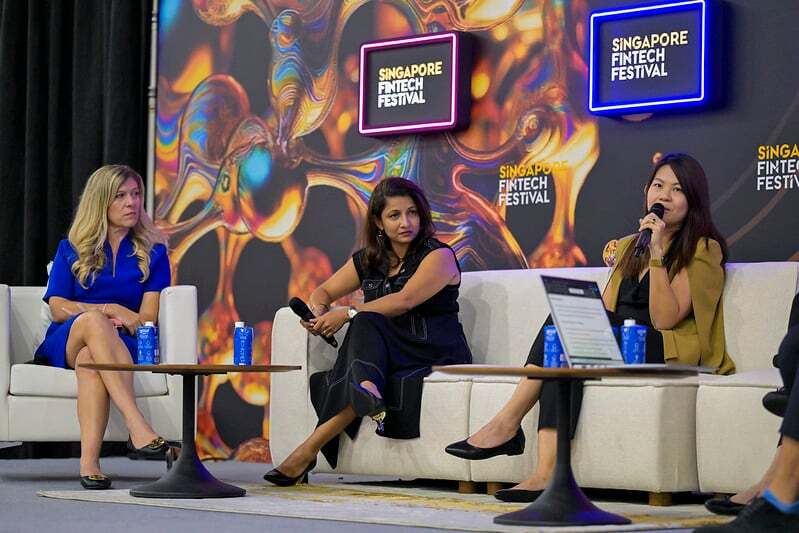 Hall 3, 18–20 Nov
Policy Stage
New tech and policy developments shaping finance
-
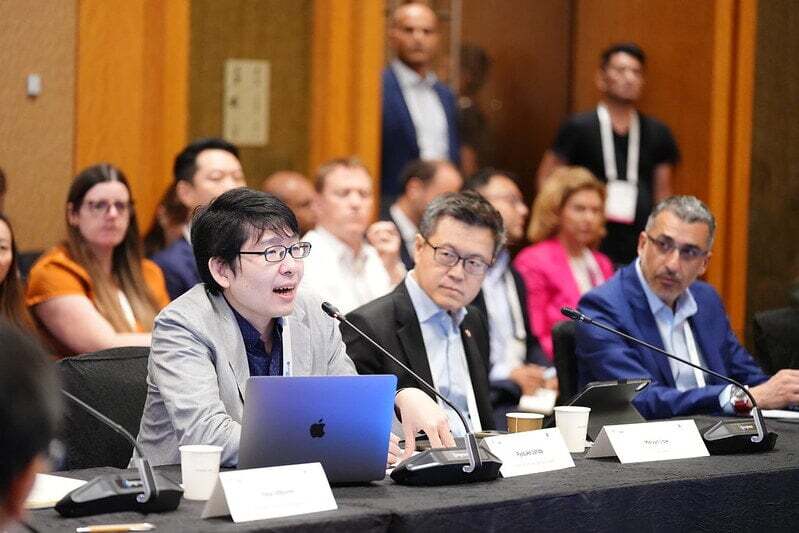 By invitation, 16–17 Nov
Public-Private Roundtables
Steered by a regulator or policymaker, under Chatham House rules
-
Policy Pass
For central banks, regulators and government institutions, with the Regulators Lounge.
Complimentary
Explore All Five Forces
-

Technology Rewiring
Scaling Technology to Create a Competitive Advantage
-

Geoeconomic Rewiring
Building New Economic Corridors
-

Capital Rewiring
Rebuilding the Investment Priorities
-

Talent Rewiring
Building the Workforce of the Future
-

Policy Rewiring
Aligning Innovation & Regulation
You are here