

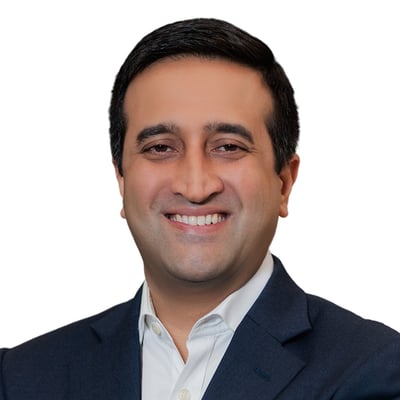
Rahul Advani
Global Co-Head of Policy
Ripple
Rahul Advani is the Global Co-Head of Policy at Ripple.
Based in Singapore, Rahul oversees Ripple’s engagement and advocacy with regulators and policymakers in the APAC and EMEA regions, working with Ripple's regional policy teams to support and develop regulation that promotes responsible innovation in digital assets and blockchain technology.
Prior to joining Ripple, Rahul spent over 12 years in financial services, most recently as the Head of Public Policy, Asia Pacific at the International Swaps and Derivatives Association, Inc. Prior to that, Rahul worked with Bloomberg L.P. in their offices in Mumbai, Singapore, and Hong Kong in multiple roles across valuations, business development, and sales for both exchange-traded and OTC derivative products.
Rahul is the Chair of the Blockchain Association of Singapore Stablecoin and CBDC Subcommittee, and an Ambassador for the Global Blockchain Business Council (GBBC). He is also Co-Chair of the GBBC Digital Money & Wallets Working Group.
He holds a Master in Public Policy from the Lee Kuan Yew School of Public Policy in Singapore.
Speaking at SFF 2026
-
2:40–3:20pmFri 20 NovPolicy StageHall 3, Singapore EXPOOpen
Policy Rewiring
Anchoring Digital Financial Markets
-
 Aaron SeabrookChief Operating OfficerMarketnode
-
 Isadora ArredondoVice President, Global PolicyHedera
-
 Dr. Wolfram SeidemannChief Executive Officer, Currency TechnologyGiesecke+Devrient
-
 Rahul AdvaniGlobal Co-Head of PolicyRipple
-
 Chengyi OngDirector of Policy & Regulatory Strategy, APACCircleModerator
About this session
Tokenisation has moved well past the pilot stage, but a market only works if the infrastructure underneath it can be trusted: networks built for institutional scale, platforms that connect issuance, trading and settlement, a trusted form of money to settle in, and an infrastructure that lets institutions run digital assets as everyday business. This panel brings together the people building each of those layers.
The discussion works through what each layer needs to hold up under real institutional volumes, where the handoffs between networks, platforms, settlement money and legacy systems still cause friction, and what the operating model behind digital assets looks like in practice: who runs what, how it connects to existing infrastructure, and what it takes to scale. Attendees leave with a practical view of what "anchoring" digital markets means, from the network to the money that settles on it. -

