

Wed 18 Nov2:45–3:15pmPolicy Stage
Cross-Border Connectivity: How Regional Blocs are Building Their Own Financial Integration
Add to calendar

About This Session
Not every country can build global-scale financial infrastructure alone. Across the world, groups of countries are pooling resources, coordinating oversight, and interlinking systems regionally, choosing collective action over waiting for a single global standard or going it alone.
This panel brings together three different models of that regional playbook. The discussion works through what it takes to build financial cooperation at the bloc level: how these regional mechanisms actually got built, what kept smaller or newer members willing to join in, and where this collective model succeeds — or strains — compared to a single institution building alone. Attendees leave with a practical view of when banding together beats going it alone, and what it costs to make that work.
- When
- Wednesday 18 November2:45–3:15pm, Singapore time
- Where
- Policy StageHall 3, Singapore EXPO
- Access
- Open Open sessionWith a Delegate, Executive, Startup, Policy, Academic, MeetUp or Trade Visitor Pass. The Trade Visitor Pass is complimentary.Compare all passes
Speakers
-
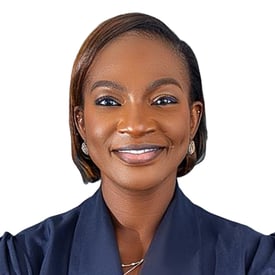
Clara B. Arthur
Chief Executive
Ghana Interbank Payment & Settlement Systems (GhIPSS)
-
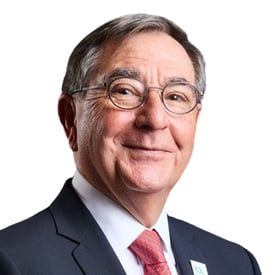
José Beltrán
Board Chair
Nexus Global Payments Ltd
-
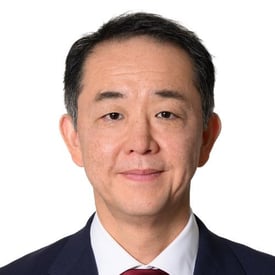
Yasuto Watanabe
Chief Executive Officer & Director
ASEAN+3 Macroeconomic Research Office (AMRO)
-
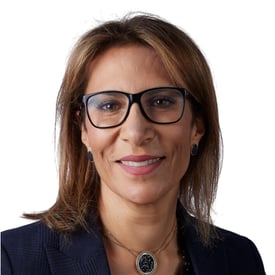
Maha El Dimachki
Chief Executive Officer, GFTN Solutions
Global Finance & Technology Network (GFTN)
Moderator
More Policy Rewiring Sessions
-
3:15–3:30pmWed 18 NovPolicy StageHall 3, Singapore EXPOOpen
Policy Rewiring
Transforming Financial Supervision Through Technology, Globally
About this session
In this session, Marlene Amstad, Chair of FINMA and Chair of the IOSCO SupTech Forum, whose members oversee jurisdictions covering roughly 90% of global securities markets, shows how international cooperation on technology can transform financial supervision worldwide: detecting risks earlier, working more efficiently and strengthening trust across borders.
-
3:30–4:00pmWed 18 NovPolicy StageHall 3, Singapore EXPOOpen
Policy Rewiring
Can Regulation Be Written Into Money Itself? The Case for Rules in the Rails, Tokenized Deposits & Conditional Money
-
 Dr. Eva HüpkesSecretary GeneralInternational Association of Deposit Insurers
-
 Ivan OdonnatGeneral Director for Financial Stability & OperationsBanque de France
-
 Kazuki UedaDirector, Head of Fintech GroupBank of Japan
-
 Vira PlatonovaGlobal Head of Visa DirectVisaModerator
About this session
Tokenized deposits and conditional money take the programmability idea one layer deeper. They pilot whether settlement, eligibility and compliance can be embedded directly in the money rather than enforced around it. That raises a regulatory question few frameworks have caught up with: who is liable when the rule embedded in the transaction, not a human decision, turns out to be wrong. This discussion examines how the embedded-rules approach works in practice, and what it removes from the compliance function. It also looks at what new failure modes this introduces once the rule is baked into the transfer rather than checked afterwards. Attendees leave with a clearer view of where this model is genuinely ready, and where regulators are still working out how to hold it accountable. One key question the discussion will dive into: if compliance is embedded in the money itself, who is accountable when the embedded rule is wrong?
-
-
4:00–4:30pmWed 18 NovPolicy StageHall 3, Singapore EXPOOpen
Policy Rewiring
Who Builds the Bridge Between National Payment Schemes; and Who Owns the Toll?
-
 Alan NiChief Executive OfficerTNG Digital Sdn. Bhd.
-
 Carrie SuenVice President, Head of Global Affairs & Strategic DevelopmentAnt International
-
 Lawrence ChanGroup Chief Executive OfficerNetwork for Electronic Transfers (Singapore)
-
 Jo YeoDirectorMonetary Authority of SingaporeModerator
About this session
National instant payment schemes are proliferating around the world, yet most remain valuable only within their own borders. As domestic networks mature, the next source of value lies not in individual schemes, but in the bridges that connect them.
This session explores the emerging cross-border interoperability layer: who is building it, how common messaging standards and technical frameworks make it possible, and how governance, costs, revenues, and risks are shared among the parties involved. The discussion will examine the different models being adopted globally, from bilateral connections to multilateral networks and shared infrastructure platforms.
Participants will leave with a clearer understanding of where payment interoperability is succeeding in practice, what challenges remain, and the trade-offs between different connectivity approaches.
One of the central questions the panel will explore is: when one country's instant payment scheme needs to communicate with another's, who builds the bridge, and who owns the toll? -