

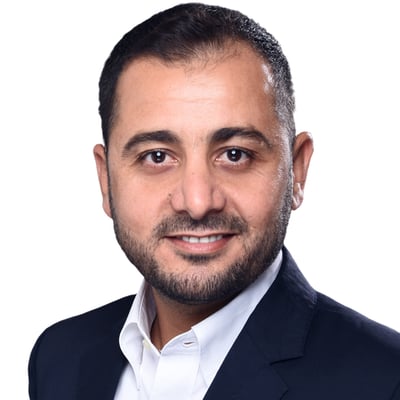
Luay Obaidi
Chief Product Officer
Qi Card
Luay Al-Obaidi is a business executive and entrepreneur with over 20 years of experience across technology, financial services, and business transformation. As Chief Product Officer, he leads product strategy and innovation at SuperQi, Iraq’s leading super app, and oversees digital businesses across health, entertainment, and beauty.
Having lived and worked across the Middle East, Europe, and North Africa, Luay brings a global perspective to building digital products and businesses. He is particularly interested in how technology, customer needs, and collaboration between fintech players can drive meaningful transformation.
Speaking at SFF 2026
-
5:00–5:30pmWed 18 NovCatalyst StageHall 3, Singapore EXPOOpen
Technology Rewiring
Driving Financial Inclusion and Shared Prosperity in an Age of Uncertainty
-
 William UryProfessorHarvard Law School
-
 Alexandre ChadeFounder & ChairmanDotz
-
 Yang PengChief Executive OfficerAnt International
-
 Luay ObaidiChief Product OfficerQi Card
-
 Carrie SuenVice President, Head of Global Affairs & Strategic DevelopmentAnt InternationalModerator
About this session
From the ancient markets of Mesopotamia to today’s digital corridors linking Iraq, Brazil and Asia, trade has always been about more than goods. It is how people build livelihoods, trust and opportunity. Today, geopolitical uncertainty, regionalisation and fast advances in AI are redrawing the paths to prosperity. Yet what entrepreneurs and families want remains strikingly similar across borders.
William Ury, co-founder of the Harvard Program on Negotiation and author of Possible, argues that progress comes from listening deeply and finding shared interests, even in a divided world. This session puts that idea to work in finance. Alexandre Chade brings Brazil’s experience through Dotz, Luay Obaidi shows how Qi Card is widening access to digital payments in Iraq, and Yang Peng sets out how Ant International connects consumers, merchants and small businesses across markets. The panel asks not only what technology can do, but whom it serves. Payments, AI and connectivity are the means; dignity, opportunity and shared prosperity are the purpose.
The discussion also tackles a central tension. Global trade keeps finding ways to grow, yet smaller enterprises and underserved households still face fragmented rules, limited access and uneven digital capabilities. What can private-sector ingenuity achieve on its own, and where must governments and institutions build the conditions for inclusive growth? -

