

Fri 20 Nov1:30–2:10pmPolicy Stage
Keeping Money Moving: Financial Resilience in an Age of Emerging Risks
Add to calendar

About This Session
As financial systems become more digital and interconnected, new technologies are reshaping the risks to their resilience. Quantum computing could eventually undermine the cryptography securing today’s financial infrastructure, frontier AI is changing the scale and sophistication of cyber threats and fraud, and the growth of tokenised money raises new questions about the reliability of the infrastructure on which it depends.
This session brings together perspectives from central banking, financial regulation and digital money to examine how the financial system can prepare for these risks before they materialise. What needs to happen now to ensure that emerging technologies strengthen financial infrastructure rather than create new points of failure?
- When
- Friday 20 November1:30–2:10pm, Singapore time
- Where
- Policy StageHall 3, Singapore EXPO
- Access
- Open Open sessionWith a Delegate, Executive, Startup, Policy, Academic, MeetUp or Trade Visitor Pass. The Trade Visitor Pass is complimentary.Compare all passes
Speakers
-

Colin Payne
Head of Innovation
Financial Conduct Authority (FCA)
-

André Brunner
Programme Manager, Pontes & Appia
European Central Bank
-

Thomas Moser
Alternate Member of the Governing Board
Swiss National Bank
-
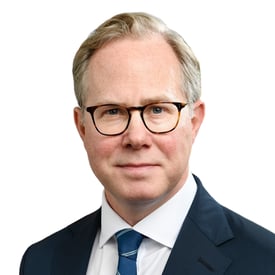
Hon. Jonathan Burke
Assistant Secretary for Terrorist Financing
U.S. Treasury
-
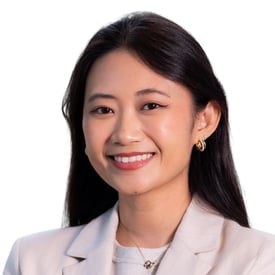
Jael Tan
Head of Government Programmes
Global Finance & Technology Network (GFTN)
Moderator
More Policy Rewiring Sessions
-
2:40–3:20pmFri 20 NovPolicy StageHall 3, Singapore EXPOOpen
Policy Rewiring
Anchoring Digital Financial Markets
-
 Aaron SeabrookChief Operating OfficerMarketnode
-
 Rahul AdvaniGlobal Co-Head of PolicyRipple
-
 Dr. Wolfram SeidemannChief Executive Officer, Currency TechnologyGiesecke+Devrient
-
 Isadora ArredondoVice President, Global PolicyHedera
-
 Chengyi OngDirector of Policy & Regulatory Strategy, APACCircleModerator
About this session
Tokenisation has moved well past the pilot stage, but a market only works if the infrastructure underneath it can be trusted: networks built for institutional scale, platforms that connect issuance, trading and settlement, a trusted form of money to settle in, and an infrastructure that lets institutions run digital assets as everyday business. This panel brings together the people building each of those layers.
The discussion works through what each layer needs to hold up under real institutional volumes, where the handoffs between networks, platforms, settlement money and legacy systems still cause friction, and what the operating model behind digital assets looks like in practice: who runs what, how it connects to existing infrastructure, and what it takes to scale. Attendees leave with a practical view of what "anchoring" digital markets means, from the network to the money that settles on it. -
-
3:20–3:50pmFri 20 NovPolicy StageHall 3, Singapore EXPOOpen
Policy Rewiring
Beyond Faster Payments: What’s Still Holding Cross-Border Payments Back?
-
 Shadab TaiyabiAsia Head of Fintech Sales, GPSHSBC
-
 Ben WongGeneral Manager, Southeast Asia & Hong KongAdyen
-
 Violas XiaoSingapore Chief Executive OfficerXTransfer
-
 Jeremy TanFounder & Chief Executive OfficerLiquid Group Pte Ltd
-
 Pieter FrankenGroup Chief Technology OfficerGlobal Finance & Technology Network (GFTN)Moderator
About this session
For years, the payments industry has shared one ambition: make cross-border payments faster, cheaper, more transparent and more inclusive. Progress has been made, but the hardest problems are no longer technical. Firms moving money across borders still face differing compliance requirements, inconsistent standards, limited interoperability and persistent first- and last-mile frictions. These costs fall hardest on merchants and small businesses.
With the G20’s 2027 targets for cross-border payments approaching, the question is what can actually be delivered, and by whom.
This session brings together practitioners who move money across borders every day, from merchant acquiring and cross-border platforms to the fintech industry. It looks at Asia’s corridors, where markets operate at very different stages of development. Which bottlenecks cost businesses most? What has worked in practice? And where does industry need to act together, or need policymakers to step in, to turn ambition into measurable progress? -
-
3:50–4:20pmFri 20 NovPolicy StageHall 3, Singapore EXPOOpen
Policy Rewiring
Asia's Payments Moment: Building Connectivity Across ASEAN and Beyond
-
 Atty. Bridget Rose Mesina-RomeroDirectorBangko Sentral ng Pilipinas
-
 Sakkapop PanyanukulAssistant Governor, Payment Systems Policy & Supervision GroupBank of Thailand
-
 Benjamin LeeChief Operating OfficerNexus Global PaymentsModerator
About this session
Bilateral links between Asia's national instant-payment systems already exist and are multiplying. QR code interoperability between several member states has been live for years, built one country pair at a time. The next opportunity is a genuinely connected system, one where a payment initiated in any linked market settles instantly in any other, without each pair of countries negotiating its own bridge. Emerging multilateral models such as Nexus show how the region and beyond could move beyond corridor-by-corridor integration. As Singapore prepares to take over the ASEAN chairmanship from the Philippines in 2027, regional payment connectivity is shaping up to be one of the flagship items on its agenda, and this session is where that opportunity gets mapped out, a year ahead of time.
This panel brings together central bank representatives from across ASEAN and India to discuss what a genuinely connected instant-payment system could unlock: aligning local-currency settlement frameworks, building on the links already in place, from ASEAN's QR interoperability to the UPI-PayNow corridor, to reach true multilateral interoperability, and establishing the shared governance that lets partners trust a system built together rather than one at a time. Attendees leave with a clear view of the progress already made, what Singapore's incoming ASEAN chairmanship could prioritise, and how close the wider region actually is to instant payments that work the same way whether you're paying across the street or across a border. -