

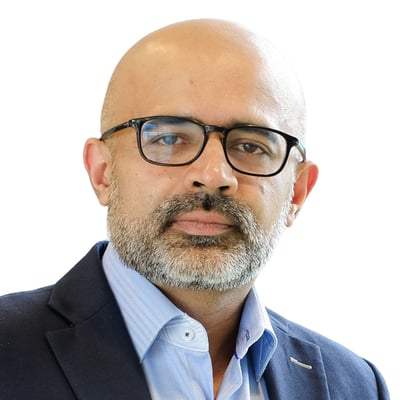
Prof. Sameer Hasija
Henry Ford Chaired Professor, Dean of Executive Education, and Dean of the Asia Campus
INSEAD Singapore
Sameer Hasija is a Professor of Technology & Operations Management, Dean of Executive Education, and Dean of the Asia Campus at INSEAD.
Sameer is passionate about the role of emerging technologies and how they can allow the creation of business models that were previously inconceivable. He often gives keynote speeches or lectures on technology and business model innovation for boards/CXOs/senior managers at numerous for-profit & governmental organizations, trade confederations, global think tanks, & academic centers of excellence.
Speaking at SFF 2026
-
3:40–4:15pmFri 20 NovFounders StageHall 2, Singapore EXPOPremium
Talent Rewiring
Prototype Rich, Capital Poor: Fixing the University-to-Market Gap
-
 Prof. Shonali KrishnaswamyDirector of Monash AI InstituteMonash University, Australia
-
 Prof. Sameer HasijaHenry Ford Chaired Professor, Dean of Executive Education, and Dean of the Asia CampusINSEAD Singapore
-
 Bryan ZhangExecutive Chair, Financial Innovation for Impact; Executive Director, Cambridge Centre for Alternative FinanceUniversity of Cambridge
-
 Sharanjit LeylMC, ChancellorBath Spa UniversityModerator
About this session
Universities are some of the most productive IP engines in the world. Researchers and students build new technology, file patents and often ship working prototypes. Then too much of it stalls. The people who invent are rarely the people who raise money, price a licence or find a first customer. Tech transfer offices work to academic timelines while capital works to market ones, so good IP sits on the shelf.
This panel asks two questions. First, what should universities change so their IP becomes investable: spin-out terms, founder support, equity and licensing models, and incentives for faculty? Second, should investors stop waiting for deals to show up and go into campuses to find them? We'll look at what each side gets wrong about the other, and what a working lab-to-market pipeline looks like. -

