

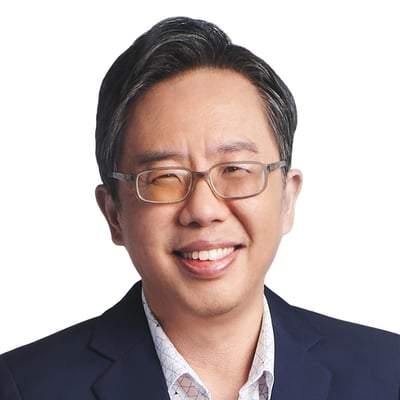
Kian Teck Soh
Director of Product
2C2P by Antom
Kian Teck is the Director of Product Management at 2C2P, bringing more than 20 years of experience in the payments industry.
In his present role, he is responsible for product management of the payment platforms, overseeing the development of core payment services such as omnichannel, 3DS and risk management. Prior to this, Kian Teck was the Senior Vice President at NETS, where he managed the implementation of NETS contactless, NETS Pay and NETS QR.
Kian Teck holds a B.A.Sc (Hons) Computer Engineering from Nanyang Technological University.
Speaking at SFF 2026
-
11:30am–12:00pmFri 20 NovMerchant AgendaMerchant Experience Zone (Hall 6)Open
Others
From One Tap to No Tap: The Future of Frictionless Payments
-
 Ramakrishnan TGStrategic Partnerships Lead, Google Payments, APACGoogle
-
 Kian Teck SohDirector of Product2C2P by Antom
-
 Minsook ChoCountry Manager, SingaporeMastercard
About this session
Payments have become faster and easier, but the journey to make a payment is not always seamless. Online payment journeys can still involve multiple steps, from moving between apps to saving and uploading QR codes. As part of PayNow Gen2, new capabilities such as deep-linking are being explored to reduce these frictions by creating a more direct path from checkout to payment.
The next frontier could go further still. Advances in AI are opening up the possibility of agents that can search, select and transact on behalf of users. This shifts the payment experience from reducing the steps a user takes to reducing the need for users to initiate individual payments at all. This will require not only new approaches to authorisation, control and accountability, but also infrastructure capable of supporting new forms of automated payment activity, including the proposed FAST-Lite micropayments rail.
This session traces that evolution from making today's payment journeys more seamless to preparing for a future in which payments may increasingly be autonomous. It asks how the industry can continue reducing friction while preserving the control, accountability and trust that consumers and merchants expect from the payment system. -

