

Thu 19 Nov4:20–4:50pmFutureMatters Stage
Balance Sheet Strategy in Money 3.0
Add to calendar

About This Session
For CFOs and treasurers, programmable money is not a thesis, it's an allocation decision. Where does settlement risk really sit when value moves in real time, and who carries the exposure? How does tokenisation rewrite collateral management and intraday liquidity? What does the yield/risk trade-off look like across deposits and other forms of money, and what happens to deposit insurance and the lender of last resort when money is code? The question boards are starting to ask: whose balance sheet does each instrument sit on, yours, your bank's, or nobody's? And are balance sheet light banking models the safer answer? A working session for the people who answer with real money.
- When
- Thursday 19 November4:20–4:50pm, Singapore time
- Where
- FutureMatters StageHall 5, Singapore EXPO
- Access
- Premium Premium sessionWith a Delegate, Executive, Startup, Policy, Academic or Media Pass. You can also watch it online with a Livestream Pass.Compare all passes


More Technology Rewiring Sessions
-
4:30–4:45pmThu 19 NovIgnite StageHall 5, Singapore EXPOOpen
Technology Rewiring
Bringing World's Oceans on Chain - Powered by ADI Foundation
-
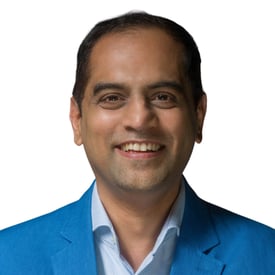
 Ramana KumarPresident of Stablecoin EcosystemADI Foundation
-
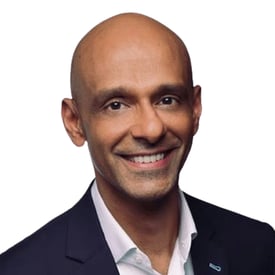
 Nilanjan RayHead of Trade Finance SolutionsADI Foundation
About this session
Marine assets are a trillion-dollar global asset class, yet ownership and financing have long been concentrated in a few geographies and a narrow pool of investors, with the top 10 nations controlling more than US$1.25 trillion in vessel value. Tokenization is changing that. This session explores how on-chain products are opening marine assets to family offices, accredited investors, alternative and yield funds, and retail investors, and showcases the solutions making this access possible.
-
-
4:40–5:10pmThu 19 NovPolicy StageHall 3, Singapore EXPOOpen
Technology Rewiring
Financing Financial Infrastructure in Emerging Markets
-
 Hortense MudengeChief Executive OfficerKigali International Financial Centre
-
 Dr. Shaji Krishnan VChairmanNABARD
-
 Dr. Veerathai SantiprabhobFormer GovernorBank of Thailand
-
 Hon. Ebson UangutaGovernorBank of Namibia
-
 Robert KaranjaBoard MemberMojaloop FoundationModerator
About this session
Building the infrastructure for financial inclusion and cross-border connectivity is one challenge. Financing it is another, and it's the one that usually gets skipped over in the excitement about what could be built. Is the binding constraint on financial inclusion the technology, or the capital to build and sustain it?
This panel brings together leaders from a small economy building its own digital public infrastructure, a hub positioning itself to draw global capital into a fast-growing regional market, and a development bank whose entire mandate is getting credit to populations mainstream finance still doesn't reach. The dialogue will focus on where the funding for this actually comes from, state budgets, development finance, or private capital drawn in by the right market positioning, and what it takes for a smaller or developing market to make itself genuinely investable. -
-
11:15–11:35amFri 20 NovFestival StageHall 1, Singapore EXPOPremium
Technology Rewiring
From AI Capability to Economic Growth
About this session
We built payment systems for humans—accounts, cards, and checkout flows designed around people clicking "buy." But AI agents don't shop that way. As autonomous systems begin to transact, negotiate, and settle at machine speed, they expose how much of our economic infrastructure simply wasn't built for them. Payments are just the surface; identity, trust, contracts, and settlement all need reinventing. Learn what economic infrastructure AI agents actually require beyond payment rails, how identity and trust must evolve when machines transact autonomously, and who is building the foundational layers of the agentic economy.
