

Wed 18 Nov4:00–4:30pmPolicy Stage
Who Builds the Bridge Between National Payment Schemes; and Who Owns the Toll?
Add to calendar

About This Session
National instant payment schemes are proliferating around the world, yet most remain valuable only within their own borders. As domestic networks mature, the next source of value lies not in individual schemes, but in the bridges that connect them.
This session explores the emerging cross-border interoperability layer: who is building it, how common messaging standards and technical frameworks make it possible, and how governance, costs, revenues, and risks are shared among the parties involved. The discussion will examine the different models being adopted globally, from bilateral connections to multilateral networks and shared infrastructure platforms.
Participants will leave with a clearer understanding of where payment interoperability is succeeding in practice, what challenges remain, and the trade-offs between different connectivity approaches.
One of the central questions the panel will explore is: when one country's instant payment scheme needs to communicate with another's, who builds the bridge, and who owns the toll?
- When
- Wednesday 18 November4:00–4:30pm, Singapore time
- Where
- Policy StageHall 3, Singapore EXPO
- Access
- Open Open sessionWith a Delegate, Executive, Startup, Policy, Academic, MeetUp or Trade Visitor Pass. The Trade Visitor Pass is complimentary.Compare all passes
Speakers
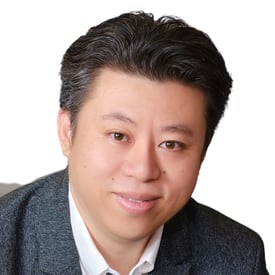
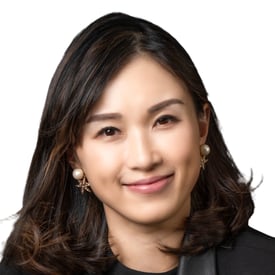
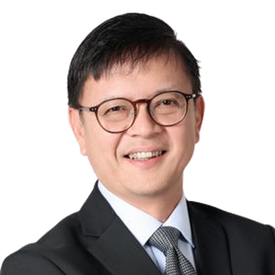

More Policy Rewiring Sessions
-
4:30–5:00pmWed 18 NovPolicy StageHall 3, Singapore EXPOOpen
Policy Rewiring
Cross-Border Wholesale Connectivity: Building a More Connected Financial System
-
 Ivan OdonnatGeneral Director for Financial Stability & OperationsBanque de France
-
 Tommaso Mancini-GriffoliHead of the Innovation HubBank for International Settlements
-
 Dr. Alexandra HachmeisterDirector General Digital EuroDeutsche Bundesbank
-
 Tom MuttonExecutive Director of Payments Innovation & FintechBank of England
-
 Alan LimDirector & Head, Financial Infrastructure & Artificial Intelligence OfficeMonetary Authority of SingaporeModerator
About this session
As digital money, tokenized assets and next-generation financial infrastructures gain traction around the world, jurisdictions and institutions are adopting a growing range of technologies, infrastructure models and settlement systems. While this diversity is driving innovation, it also raises an important question: how can increasingly interconnected financial systems continue to operate seamlessly across borders — without waiting for a single global standard to emerge first?
This panel brings together the institutions alongside policymakers and innovators from Asia, Europe and the UK to discuss what regional cooperation actually requires in practice: unified ledgers, synchronisation mechanisms, privacy-preserving technologies, and the governance arrangements that let independently built systems trust one another.
The discussion will examine the technical, legal, operational and regulatory challenges involved in scaling these regional models, and explore how deeper connectivity between them — rather than a single unified global system — may be the more realistic path to an interconnected financial system. -
-
4:40–5:15pmWed 18 NovFounders StageHall 2, Singapore EXPOPremium
Policy Rewiring
Is Cross-Border Mutual Recognition Through Sandboxes Now Closer or Farther?
-
 Juan Pablo OrtegaCo-founder & Chief Executive OfficerYuno
-
 Arjun Vir SinghPartner, Global Head of Fintech & Digital AssetsArthur D. LittleModerator
About this session
Expanding across fragmented regional markets forces digital finance startups into repetitive licensing cycles that multiply compliance costs and stall international scale. Recent progress by Kenya and Rwanda’s central banks in establishing mutual licence-passporting demonstrates that cross-border supervisory reciprocity is workable in practice. A recent survey by TechCabal Research revealed that 62.5% of regional fintechs already operate internationally or plan to, with an identical proportion backing passporting frameworks. This session convenes financial regulators and founders to examine how central banks can align supervisory frameworks and establish mutual recognition standards without compromising financial stability or compliance oversight.
-
-
9:30–9:50amThu 19 NovFestival StageHall 1, Singapore EXPOPremium
Policy Rewiring
In Conversation with Dan Katz, First Managing Director of the International Monetary Fund
-
 Dan KatzFirst Deputy Managing DirectorInternational Monetary Fund
-
 Sopnendu MohantyGroup Chief Executive OfficerGlobal Finance & Technology Network (GFTN)Moderator
About this session
What happens to the economy when AI can act on our behalf?
AI agents already write code and handle many customer queries, and they are beginning to make purchases and payments. As they become more capable, they could change how businesses operate, how work is organized and how money moves, opening the way to new products, services, and sources of growth.
The spread of agentic AI also raises hard questions, especially about jobs. Which roles will change, what new kinds of work will emerge, and how can people build the skills to work alongside AI? In this fireside chat, IMF First Deputy Managing Director Dan Katz will discuss the economic promise of agentic AI, the concerns that come with it, and what policymakers can do to help workers and economies adapt. -