

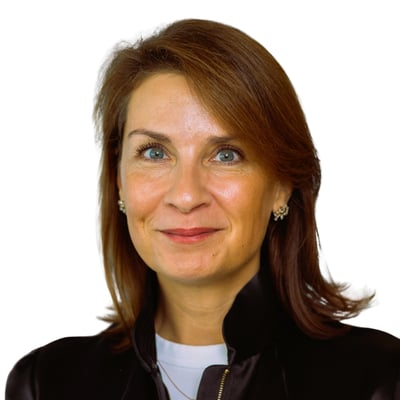
Virginie Barbot
Vice President, Southeast Asia, Financial Technology
Nasdaq
Virginie Barbot is Vice President, Southeast Asia, Financial Technology at Nasdaq, where she oversees strategic client partnerships across the region's financial technology sector.
Since joining Nasdaq in 2018, Virginie has been instrumental in expanding the company's presence in Southeast Asia, driving growth for Nasdaq's Financial Technology division. She supports market infrastructure operators, banks, brokers, and clients across a broad range of industries as they modernize their technology capabilities.
Prior to Nasdaq, Virginie held leadership roles at major financial technology and capital markets firms, including Deutsche Börse Group, where she led the Asian Market Data and Analytics Services business for the German exchange operator for eight years.
Based in Singapore since 2006, Virginie brings over two decades of FinTech industry experience and deep regional expertise. As an established leader in the industry, she was distinguished with the Excellence in Fintech award from Markets Media's Women in Finance Awards in recognition of her impact.
Speaking at SFF 2026
-
2:50–3:10pmWed 18 NovFutureMatters StageHall 5, Singapore EXPOPremiumModerator
Technology Rewiring
What Are The Unintended Consequences of Scaling Agentic AI?
-
 Lito VillanuevaFounding Chairman, Fintech Alliance PH; Executive Vice President & Chief Innovation & Inclusion Officer, Rizal Commercial Banking Corporation (RCBC)FinTech Alliance PH & RCBC
-
 Prof. Amanda BrockChief Executive OfficerOpenUK
-
 Brian O'ConnorChief Technology Officer, Commercial & New Payments FlowsMastercard
-
 Virginie BarbotVice President, Southeast Asia, Financial TechnologyNasdaqModerator
About this session
As financial institutions move agentic AI into core business, gains in growth, productivity and efficiency may bring consequences that are harder to see—and harder to contain. Within firms, greater autonomy could reshape jobs, decision-making, accountability and operational risk. Across markets and governments, it raises questions about oversight, stability and who is responsible when agents act across institutional boundaries. Closing this series, the session looks beyond the promised gains to ask who benefits, who bears the costs, and how leaders can recognise and govern outcomes they did not intend.
-

