

Fri 20 Nov4:40–5:10pmFutureMatters Stage
The Next Alpha of the Payment Value Chain
Add to calendar

About This Session
Payments are becoming faster and cheaper, but where will the industry make money next? This panel looks at where new revenue pools are emerging across the payments value chain — from data and embedded services to cross-border flows and new forms of money — and which business models can capture them from 2027 onwards.
- When
- Friday 20 November4:40–5:10pm, Singapore time
- Where
- FutureMatters StageHall 5, Singapore EXPO
- Access
- Premium Premium sessionWith a Delegate, Executive, Startup, Policy, Academic or Media Pass. You can also watch it online with a Livestream Pass.Compare all passes
Speakers
-
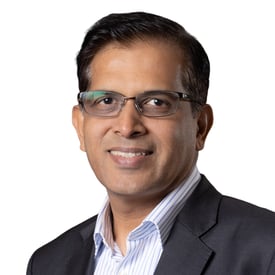
Manoj Dugar
Managing Director & Head of Global Payments Solutions, Asia (ex. Greater China)
The Hongkong & Shanghai Banking Corporation Limited
-
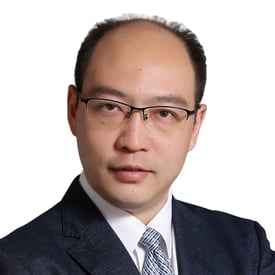
Yang Wenhui
Chief Executive Officer, TenPay Global Singapore & General Manager, Tencent Financial Technology, Asia Pacific
Tencent
-

Chen Li
General Counsel
RedotPay
-
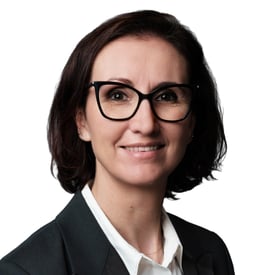
Marion Bernardi
Chief Marketing & Ecosystem Officer
Global Finance & Technology Network (GFTN)
Moderator
More Technology Rewiring Sessions
-
4:40–5:00pmFri 20 NovSide ProgrammesAI & Quantum Technology Showcase (Hall 6)Open
Technology Rewiring
AI in Manufacturing & Logistics, Top 3 Use Cases by Beyondsoft AI Practice - Powered by Beyondsoft
About this session
Beyondsoft AI Practice will be sharing AI visual inspection, AI document processing, warehouse orchestration and robotic
-
10:00–11:00amWed 18 NovSide ProgrammesGarnet 215Open
Technology Rewiring
Always-On Money: What Real-Time Interbank Settlement Means for Everyone Who Moves Money - Powered by Partior
About this session
Money can now move in seconds, but settlement between banks still keeps office hours. Behind every instant payment, banks pre-fund accounts around the world, work to cut-off times and business-day calendars, and hold costly buffers for the hours when markets are closed. As commerce, trading and tokenised assets run around the clock, the way money settles between banks will need to do the same.
Drawing on the LSEG Digital Settlement House (DiSH) and Partior partnership, this session brings together a market infrastructure provider, global banks, an interbank settlement network and an industry adviser to explain what always-on interbank settlement is, and what it changes:
- From instant payments to instant settlement: What is the difference, and why does it matter when money crosses banks, currencies and time zones?
- What changes for banks: How does settling in real time, at any hour, reduce the liquidity banks must lock up in advance, and what does that free up?
- What changes for corporates, fintechs and payment providers: What could always-on settlement mean for treasury, cross-border payments, and the cost and speed of moving money?
- What it will take: Which operating, risk and regulatory questions must be answered before this becomes everyday infrastructure?
Attendees will leave with a practical picture of what is live today, what is still being tested, and how always-on settlement could change the way they move money.
This is presented by:
- Bud Novin, Head of DiSH, LSEG Post Trade Solutions
- Rachel Whelan, Global Head of Payments & Transactional FX Product Management, Managing Director, Deutsche Bank
- Shirish Wadivkar, Chief of Payments, Partior
- Anton Ruddenklau, Global Head of Innovation and Fintech, Financial Services, KPMG
Location: Level 2, Garnet 215 -
11:15–11:45amWed 18 NovFestival StageHall 1, Singapore EXPOPremium
Technology Rewiring
From Digital to Intelligent: Who Will Build the Next Financial System?
-
 Javier Pérez-TassoChief Executive OfficerSwift
-
 Surendra RoshaCo-Chief Executive, Asia and Middle EastHSBC
-
 Yang PengChief Executive OfficerAnt International
-
 Arjun Vir SinghPartner, Global Head of Fintech & Digital AssetsArthur D. LittleModerator
About this session
Asia’s financial system is entering its next transformation. As AI, real-time payments and embedded finance reshape how money moves and financial services are delivered, the boundaries between banks, technology companies and platforms are rapidly dissolving. This session explores who will build, and control, the next generation of financial infrastructure. The conversation examines how technology and traditional finance will converge, where new sources of competitive advantage will emerge, and whether Asia will pioneer a fundamentally new model for intelligent, interconnected finance.
-