

Thu 19 Nov3:20–3:55pmFutureMatters Stage
What Makes Tokenization Production-Ready?
Add to calendar

About This Session
Tokenization doesn't fail on vision. It fails on plumbing. Behind every live corridor sits an unglamorous stack that decides whether it scales. Which settlement layer — L1, L2 or private and at what trade-off? How do you achieve legal finality across jurisdictions that don't agree? Which interoperability standards actually matter, and who is driving them? This session decodes the replicable components behind the case studies — the decisions that separate a production system from an expensive proof-of-concept.
- When
- Thursday 19 November3:20–3:55pm, Singapore time
- Where
- FutureMatters StageHall 5, Singapore EXPO
- Access
- Premium Premium sessionWith a Delegate, Executive, Startup, Policy, Academic or Media Pass. You can also watch it online with a Livestream Pass.Compare all passes
Speakers
-

Barry Plunkett
Chief Executive Officer
Cosmos Labs
-
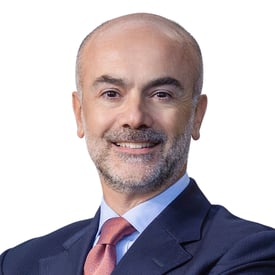
Domenico Nardelli
Treasurer
Asian Infrastructure Investment Bank (AIIB)
-

Masashi Watanabe
Managing Director, Head of Digital Assets
MUFG Bank, Ltd.
-

Salim Dhanani
Chief Executive Officer
Pave Bank
-

Jael Tan
Head of Government Programmes
Global Finance & Technology Network (GFTN)
Moderator
More Technology Rewiring Sessions
-
3:30–4:00pmThu 19 NovPolicy StageHall 3, Singapore EXPOOpen
Technology Rewiring
Agentic Payments: Are Our Rails Ready?
-
 Jesse McWatersEVP, Head of Global PolicyMastercard
-
 Kelvin LiSenior Vice PresidentAnt International
-
 Jeremy GoroHead of Financial Services Strategy & Partnerships, EMEAGoogle
-
 Jo YeoDirectorMonetary Authority of SingaporeModerator
About this session
For decades, payment systems have been designed around human behaviour. AI agents play by different rules. Unlike humans, agents do not care about rewards, interfaces or brand loyalty. They optimise for speed, cost, and reliability.
As agents begin making payments on behalf of users and businesses, they may transact at a scale and frequency never seen before, paying for everything from AI services and digital content to machine-to-machine interactions. The result could be millions of low-value transactions that challenge the economics and design of today's payment infrastructure.
Are our payment rails ready for this future? As PayNow Gen2 considers capabilities relevant to agentic commerce, this session explores whether existing payment rails can adapt, what role programmable money could play, and how payment infrastructure must evolve when machines start choosing how to pay. -
-
3:45–4:00pmThu 19 NovFrontier StageHall 6, Singapore EXPOPremium
Technology Rewiring
Revenue-aligned long-horizon agents - Powered by Sierra Technologies
About this session
Agents that resolve conversations save you money. Agents that pursue outcomes make you money. This session covers how long-horizon agents work a job from start to finish over days or weeks, and what it takes to trust them with revenue-critical work like originating loans or onboarding customers.
-
4:00–4:40pmThu 19 NovPolicy StageHall 3, Singapore EXPOOpen
Technology Rewiring
The Price of Connection: What It Actually Takes to Build Cross-Border Payment Cooperation
-
 Joyce BoExecutive Vice President, Core Payments, Asia PacificMastercard
-
 Sohini RajolaExecutive Director, GrowthNational Payments Corporation Of India (NPCI)
-
 Andrew McCormackChief Executive OfficerNexus Global Payments
-
 Carlos ÁlvarezChief Risk Officer, Member of Executive TeamFLAR
About this session
Interoperability is widely recognised as a goal, but connecting one country’s payment system to another takes more than technology. It requires alignment on regulation, standards, governance and commercial incentives — as well as negotiation over how costs, risks and benefits are shared. This panel brings together the networks, national payment schemes, policymakers and multilateral hubs working to make cross-border payments more connected, examining where regulatory and commercial frictions persist, how different payment ecosystems can connect and scale across markets, and what smaller or newer markets need to participate on viable terms.
The discussion will explore where cross-border payment cooperation is working in practice, what it takes to make connections sustainable, and whether the biggest barriers to greater connectivity are technical, regulatory or commercial. -